ACTIVITIES
The project activities were structured around a combined numerical and experimental approach to analyse the aerodynamic response of passenger boarding bridges under wind loading.
Numerical Modelling
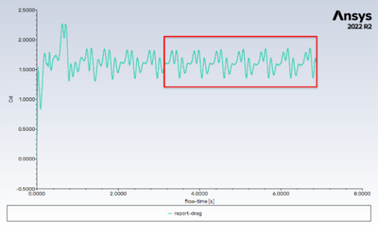
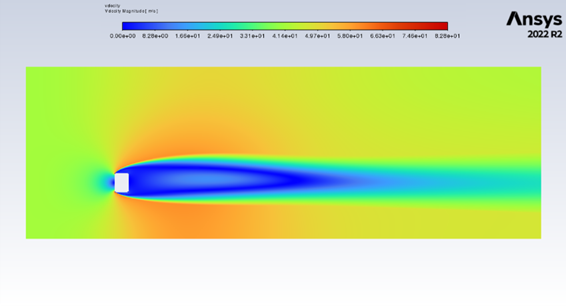
Two-dimensional numerical models of a representative section of the boarding bridge were developed using Computational Fluid Dynamics (CFD). The simulations were performed with ANSYS Fluent, ensuring adequate mesh refinement and appropriate turbulence modelling to capture airflow behaviour, pressure distribution, and aerodynamic forces acting on the structure. Both steady-state and transient analyses were carried out to evaluate the variability of the aerodynamic drag coefficient and the characteristics of the turbulent wake
Experimental Wind Tunnel Testing
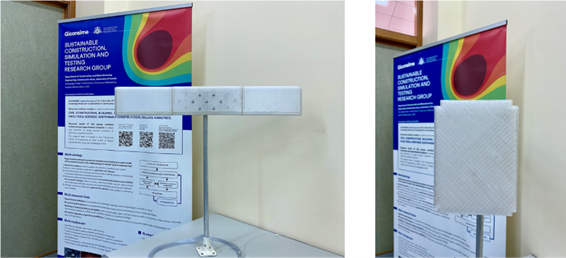
An experimental campaign was conducted in a wind tunnel using scaled physical models of the boarding bridge section. The experimental setup was designed to satisfy geometric, kinematic, and dynamic similarity criteria. The scaled prototype was instrumented with pressure measurement points and tested at different airflow velocities to ensure that critical Reynolds numbers were exceeded. The experimental results provided pressure distributions and aerodynamic force measurements for validation purposes.
Model Validation and Data Analysis
The numerical models were validated by comparing CFD results with experimental measurements obtained during the wind tunnel campaign. The agreement between numerical and experimental drag coefficients confirmed the reliability of the modelling approach. The validated models enabled a robust assessment of aerodynamic behaviour and supported the extrapolation of results to real-scale boarding bridge configurations.